
January reading
A review of my reading in the first month of 2026

I am an avid reader, always have been, always will. I read around 50 books a year, fiction and non-fiction. My sense of 2026 is that it’s going to be a year of reading, writing and painting for me. I’ve shared book reviews on an occasional basis to Facebook friends so I thought I would share them here too. I’d love to hear what you’re reading so please let me know in the comments or by return.
I am eclectic in my choices though if I had to choose a genre it would be psychological thrillers; I love a good murder mystery! More recently, I got into spy novels, ever since a friend recommended Moscow X by Dan McCloskey and The Spy and the Traitor by Ben McIntyre. However, none of my January books fell into these genres.
There seems to have been a flurry of book titles beginning with the definite article and leads me to wonder whether this is purely coincidence or is it marketing, like book covers that all seem to come from the same stable?
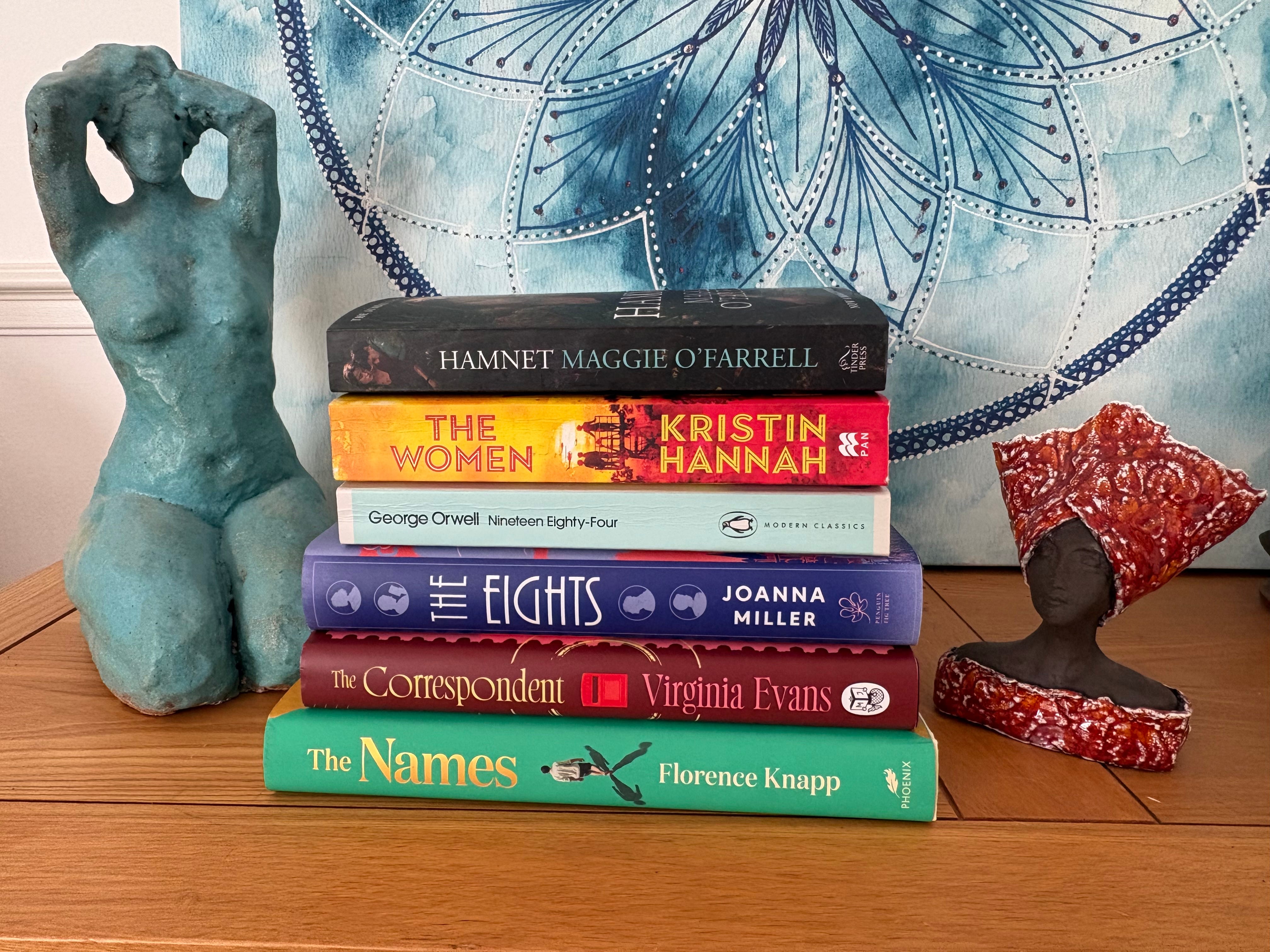
Of the six books shown in the photo 5 are about women, and 3 are debut novels - the ones at the bottom of the pile, which in no way signals their enjoyment factor, are hardbacks and easier to stack that way.
I'll start with the one I didn’t read. This may be controversial, but I struggle with Maggie O’Farrell. I’m not sure why, she is clearly well-loved, maybe it’s something to do with her style? the subject matter? All I know is that I’ve tried to read her novels and often not completed them so when Hamnet was first published I chose not to read it. Now we have the film to rapturous reviews, and the book was half-price on Amazon, so I thought I would read it. After 50 pages I gave up, so this one went on the TBR pile, or it might go straight to the charity donations pile.
Many years ago I gave myself permission to give up on a book if I wasn’t enjoying it, which was hard given how much they cost, but life is short and I am no longer at school where the curriculum often contained books of zero interest. I remember writing an essay in my teens about the Romantic poets saying how boring I found their poetry, which felt very daring.
The rest of this selection are all good and I enjoyed each of them, some more than others.
I began the year with The Eights, a debut novel from Joanna Miller. The story is set in an Oxford College in 1920 at the time of women being given the vote and the right to gain a degree at Oxford. Until this time women could study at Oxford but not graduate with a degree - which I didn’t know and find extraordinary. The history of the time gives a feminist lens to the stories of four women who form a friendship group. One of them has a secret which the author draws attention to from time to time, but there are large gaps and I lost interest in what it was, so the big reveal carried little impact. I felt the characters lacked emotional depth, more 2D than 3D, though I’m not sure whether this was intentional and a deliberate reflection of the ‘stiff upper lip’ culture of that era.
I moved on to read another historical novel, The Women by Kristin Hannah. Some years ago I read The Nightingales, which is a superb book. Hannah does her research and creates atmosphere and credibility to her stories, which is certainly the case with The Women. This one is about the Vietnam War and the women who saw service with the US Forces, often as nurses, though the mantra at the time was that there were no women in ‘Nam! The main character, as a nurse, lives through horrendous and terrifying experiences of the maimed and the dying, whilst forming intense bonds with colleagues. This is a story about love, family, friends, trust, the US politics of the 60s and 70s, what gets reported and what gets ‘spun’, how the vets were maligned on their return, and the terrible legacy of PTSD. In amongst all of this there is hope. Superb story-telling.
Then came The Correspondent by Virginia Evans, which I heard about from people online saying it was their book of 2025. This is a debut novel that seems to have gained popularity through word-of-mouth recommendation. What a joy it is! I loved it! The story is told as a series of letters to and from a woman in her mid-70s who is slowly losing her sight. She has written letters to everyone and anyone her entire life - and what a life she has lived as a pioneer working mum during the 60s and 70s. Through the letters you come to know her life and her character, which can be somewhat curmudegeonly - she doesn’t suffer fools. There are regrets and there is humour, especially her developing relationships with two older suitors for her affection. She’s not totally likeable but she is very human.
At this point in the month I took a detour with Hamnet before moving on to The Names by Florence Knapp, another debut novel, and mentioned many times by people reflecting on their best reads of 2025. The story opens with a woman going to the Registry Office with her young daughter to register the birth of her son and to give his name for the birth certificate. Her husband is called Gordon and it is his family tradition to hand the name of the father to the firstborn son, so the expectation is to name the baby as Gordon. However, the mother lives in fear that in doing so she would condemn her son to grow up in the image of his father, who we learn is an abuser of his wife. She considers two alternate names and the rest of the book tells the story of her and her family through all three names; we read three different versions set in seven year cycles all held together by the mother. It’s an interesting literary device and Knapp does it very well. The seven year jumps kept the pace of the story going. There is much in here about domestic abuse and how women become trapped in what appears to others to be a good marriage, especially coloured by the perceived positive that the husband is a doctor, the ‘good’ doctor.
Given the crazy world events of January I decided to read 1984 by George Orwell. I first read this 50 years ago as a teenager in the mid-70s. I was probably too young to appreciate it back then. Reading it now at the age of 65, being older and wiser in the ways of the world, I found 1984 to be gripping. I read it in 3 days, one of those books where other commitments got in the way because I just wanted to sit and read it. This is a literary masterpiece. Given the bleak nature of the subject matter it feels odd to say this was the best book I read in January, by a mile. It’s a dystopian novel, written after the second world war while Orwell, who became very unwell, created a story to illustrate the perils of power and totalitarianism. It’s from this book that words such as ‘Big Brother’ (Joseph Stalin), ‘doublethink’, ‘thoughtcrime’ and ‘newspeak’ dropped into the lexicon. So much of what Orwell foresaw has come to pass; with only a few tweaks this is a story that could be written today. Over the years since it’s first publication, 1984 has been banned outright by many communist regimes, and continues to be banned from school curricula around the world, including in the US where for some bizarre reason 1984 was seen to be pro-communist. Nowadays it is more likely to be banned because it makes visible the methods employed by totalitarianism and shows how we resist such measures of control.
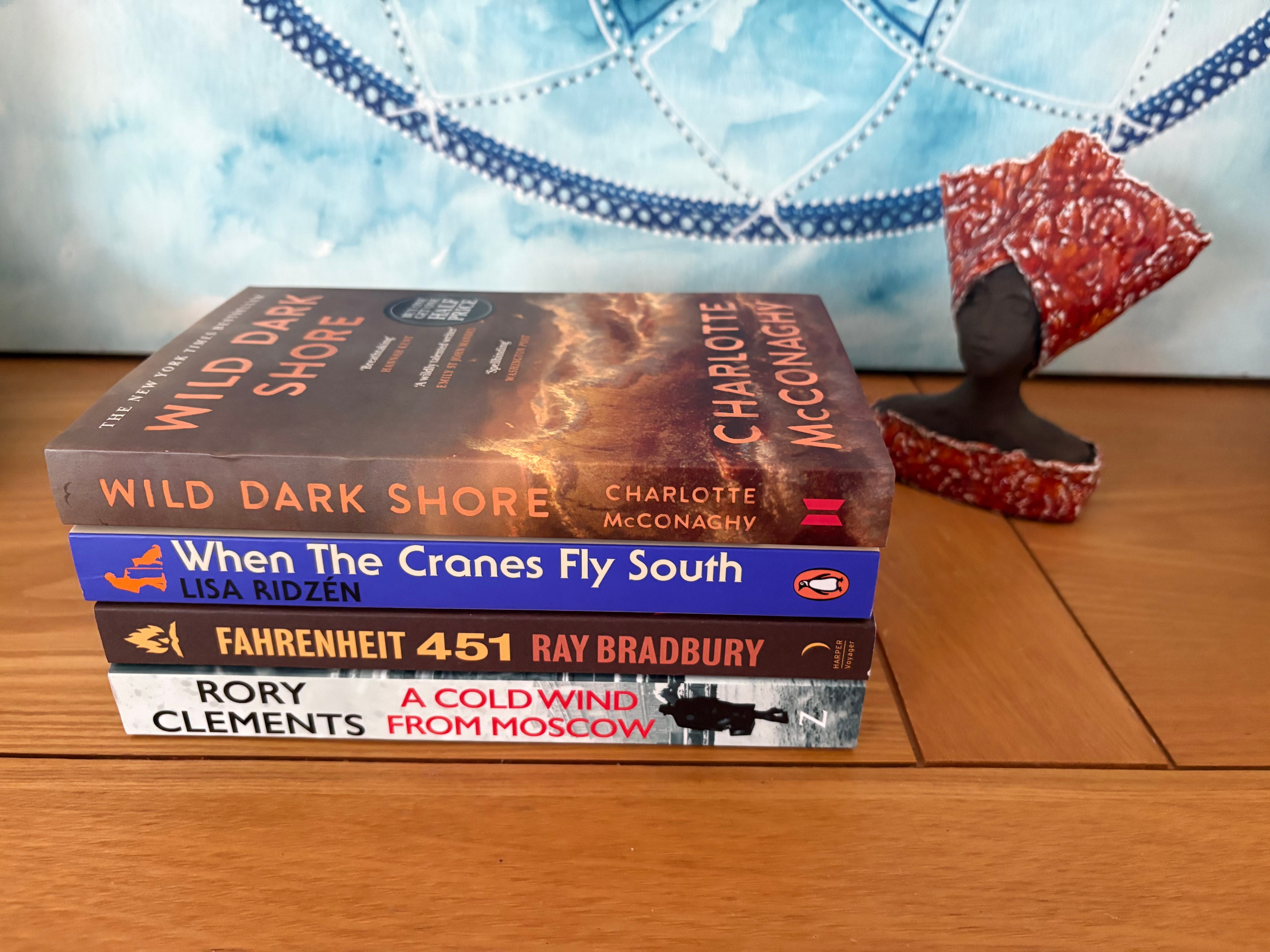
It’s Imbolc, 1 February, and I’m now reading When the Cranes Fly South by Lisa Ridzen. I’ve popped a few others on my February TBR pile, though I have plenty others on my shelves. My problem isn’t the reading of the books, it’s that I keep buying more before I’ve read the ones I’ve got, much like my love of buying watercolour paint. Let me know of your recommendations.
Thank you for sharing lynn. I’ve just read 1984 . I didn’t read this at school . I found it similar to you , prescient and completely relevant of today .
I enjoyed Hamnet - my first Maggie O’Farrell book . The rest of her books that I’ve read I found a bit and miss .
Hello Beautiful - by Ana Napolitino - a debut was wonderful . Italian immigrant parents and their Italian/ American daughters .
I’m the public library more these days.